- Infrasound: The Heartbeat of the Geyser Basins
- The YGH Array
- From Geyser Hill to your Computer Screen
- Filling in the Gaps
YGH Monitor App - Pt. 3: Use Cases
A living document showcasing examples of verified eruptions and their YGH traces
Published on: Thursday, 12 November 2026 at 00:55 UTC
YGH Monitor App - Pt. 2: How to Use the Tools
Instructions on how to navigate and use the YGH Monitor App for various forms of geyser gazing.
Published on: Saturday, 07 November 2026 at 00:55 UTC
YGH Monitor App - Pt. 1: Introduction
A new instrument in Yellowstone can be used for geyser gazing
Published on: Saturday, 07 November 2026 at 00:55 UTC
Sofirn's HS22 and SP40A Headlamps
For cavers, this is like having a sub-$150 Scurion
Published on: Wednesday, 17 December 2025 at 11:55 UTC
The Thermals Features of Yellowstone
Just over 3,000 words you didn't know you wanted to read.
Published on: Tuesday, 07 October 2025 at 11:55 UTC
Trip Report: Bighorn-Horsethief Cave System
Surveying and photography during the August 2025 project weekend.
Published on: Wednesday, 01 October 2025 at 11:55 UTC
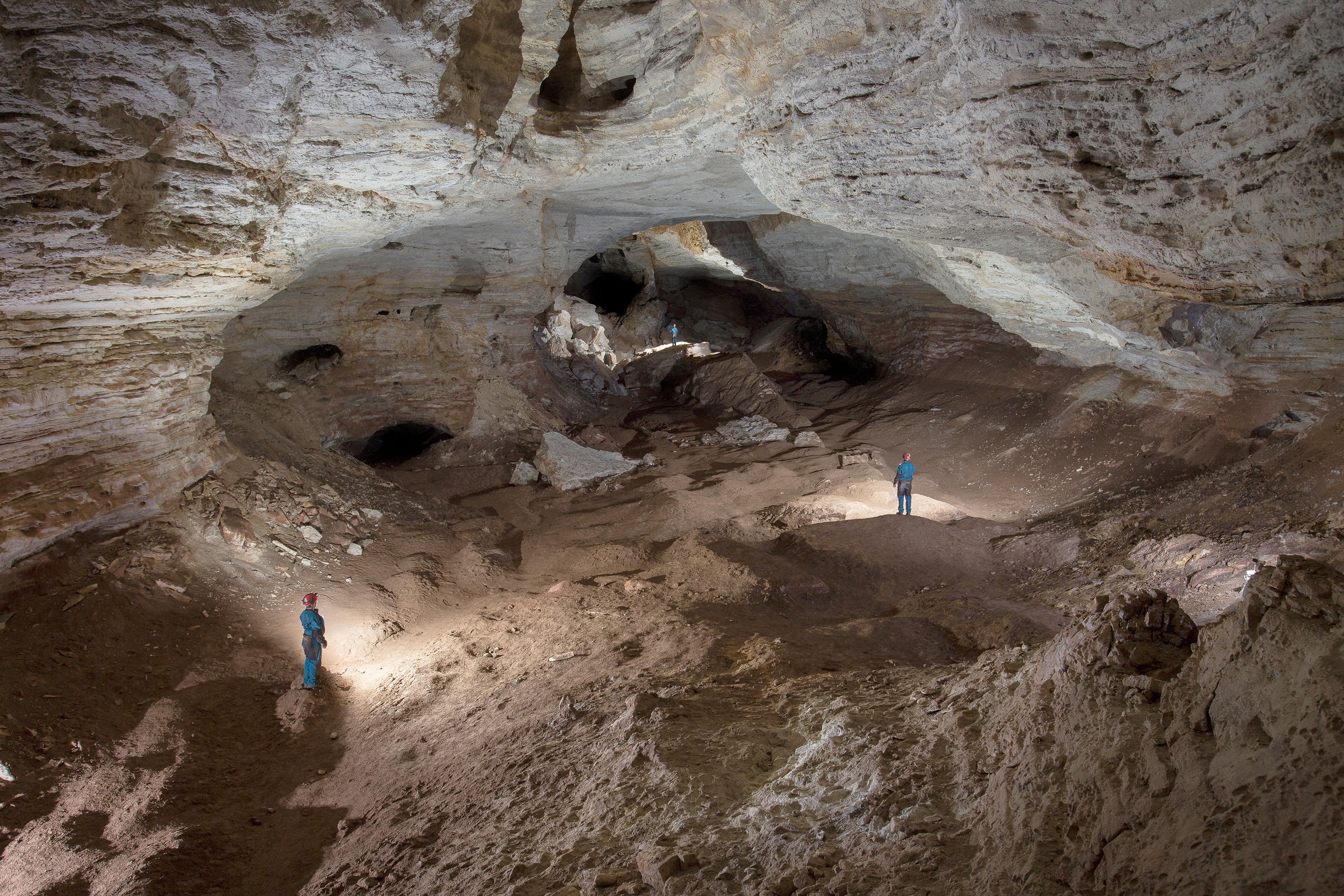
Bighorn-Horsethief Cave System
An introduction to the longest known cave in Wyoming and Montana
Published on: Tuesday, 23 September 2025 at 11:55 UTC
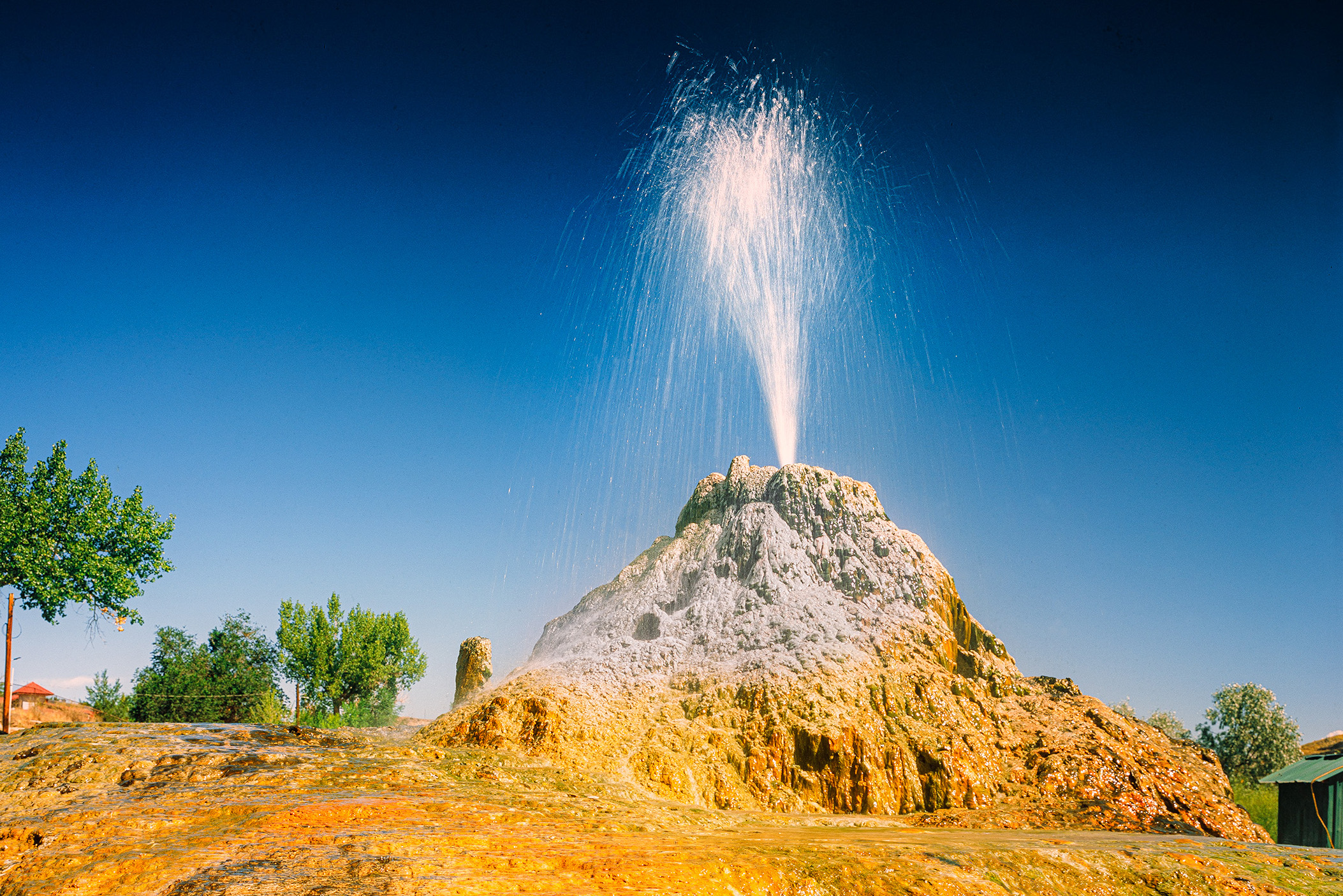
Thermopolis, WY, August 2025
Large travertine hot springs in central Wyoming
Published on: Friday, 19 September 2025 at 11:55 UTC
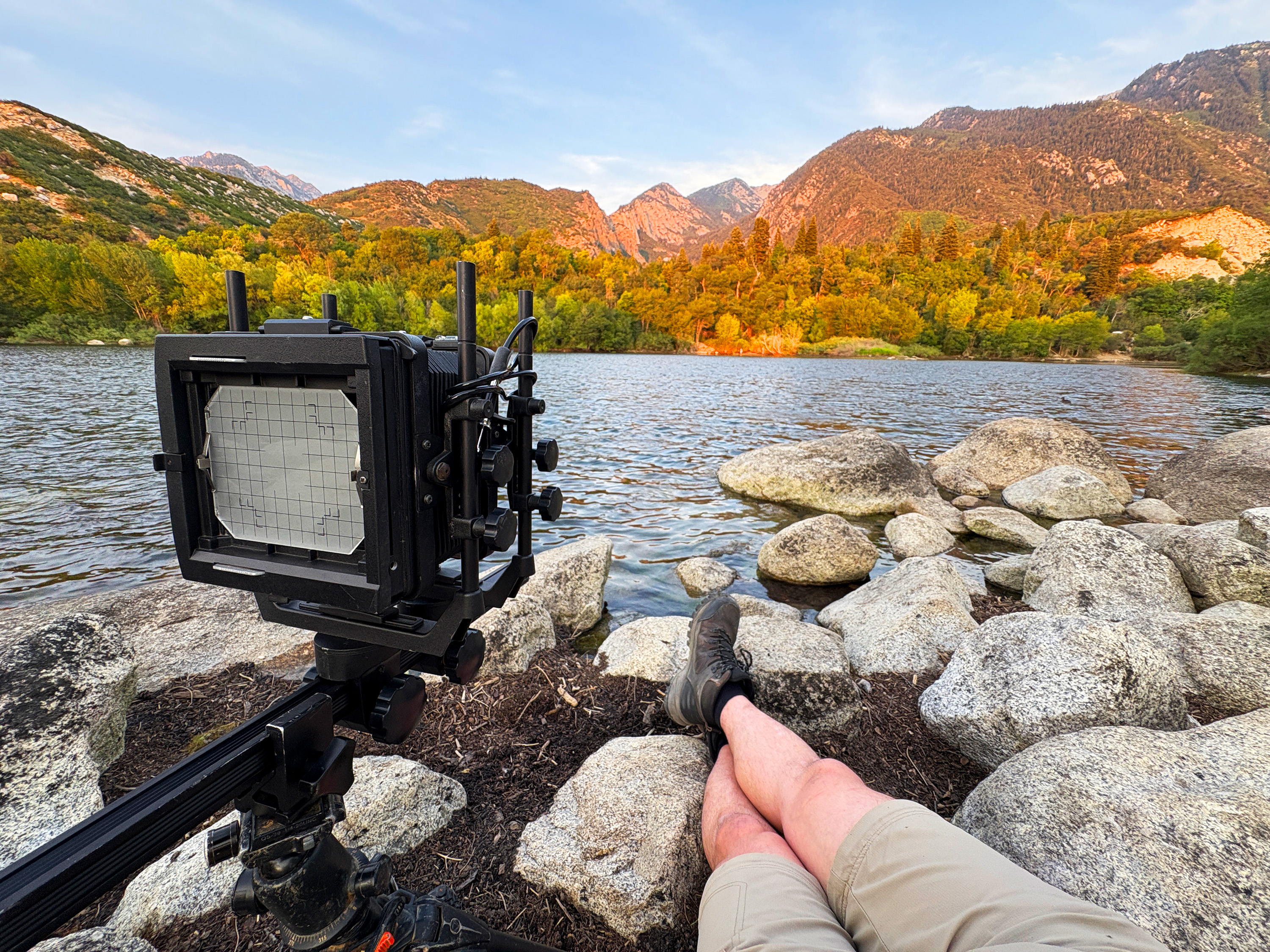
Lazy Photography in the Wasatch Range
Easy hiking and drive up sunsets from suburban Salt Lake City
Published on: Thursday, 11 September 2025 at 12:26 UTC
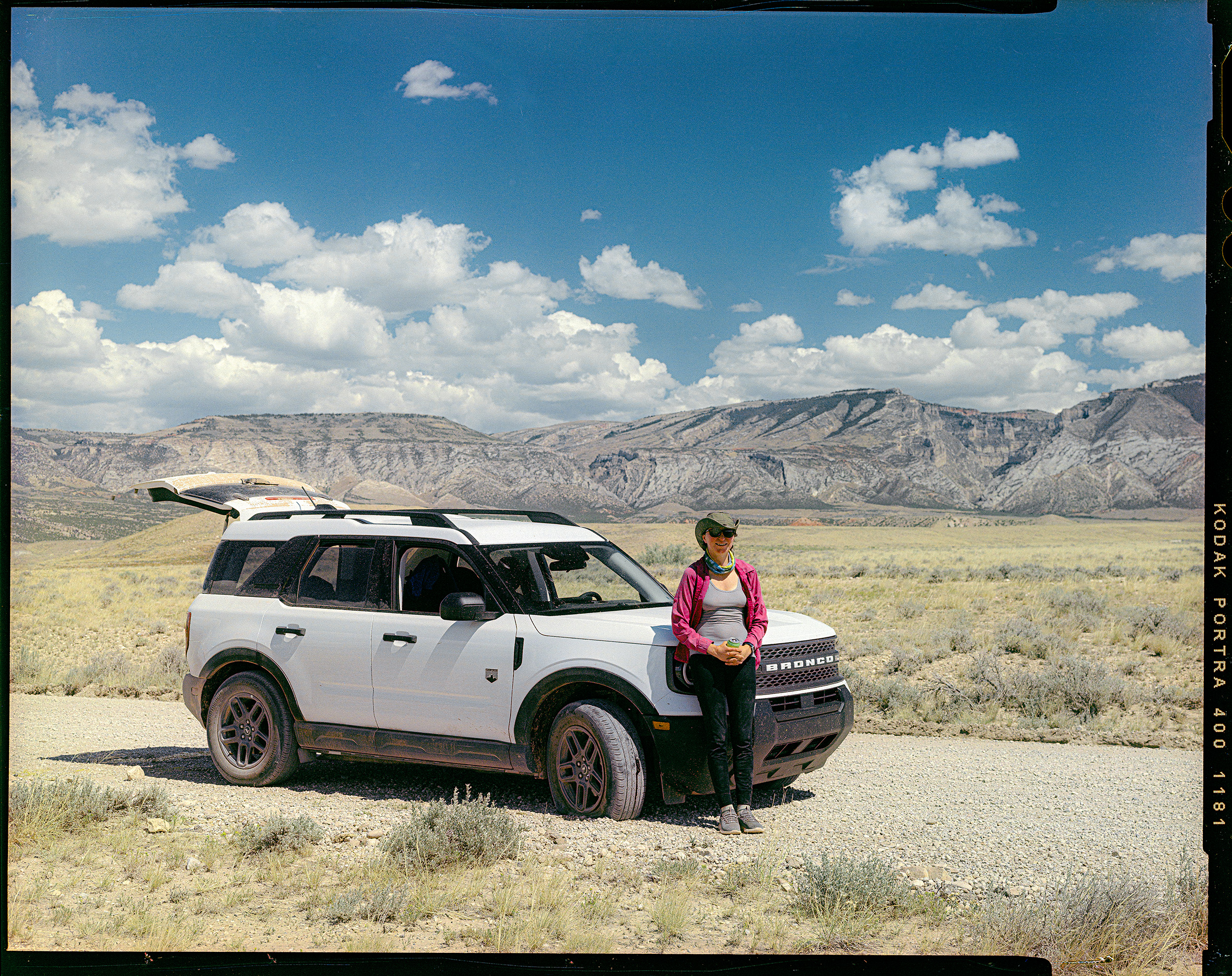
Car Review: 2026 Ford Bronco Sport
1500 miles of driving and camping with the 2026 Ford Bronco Sport
Published on: Wednesday, 10 September 2025 at 11:55 UTC
Wyoming, August 2025
Logistics and gear for eleven days of caving and photography in Big Sky Country
Published on: Wednesday, 10 September 2025 at 11:55 UTC
.jpg)
Tonto Natural Bridge
Massive travertine formation in central Arizona
Published on: Wednesday, 29 November 2023 at 11:55 UTC

Building This Website
Part 1: Lessons learned in mentally herding cats.
Published on: Friday, 14 July 2023 at 19:48 UTC
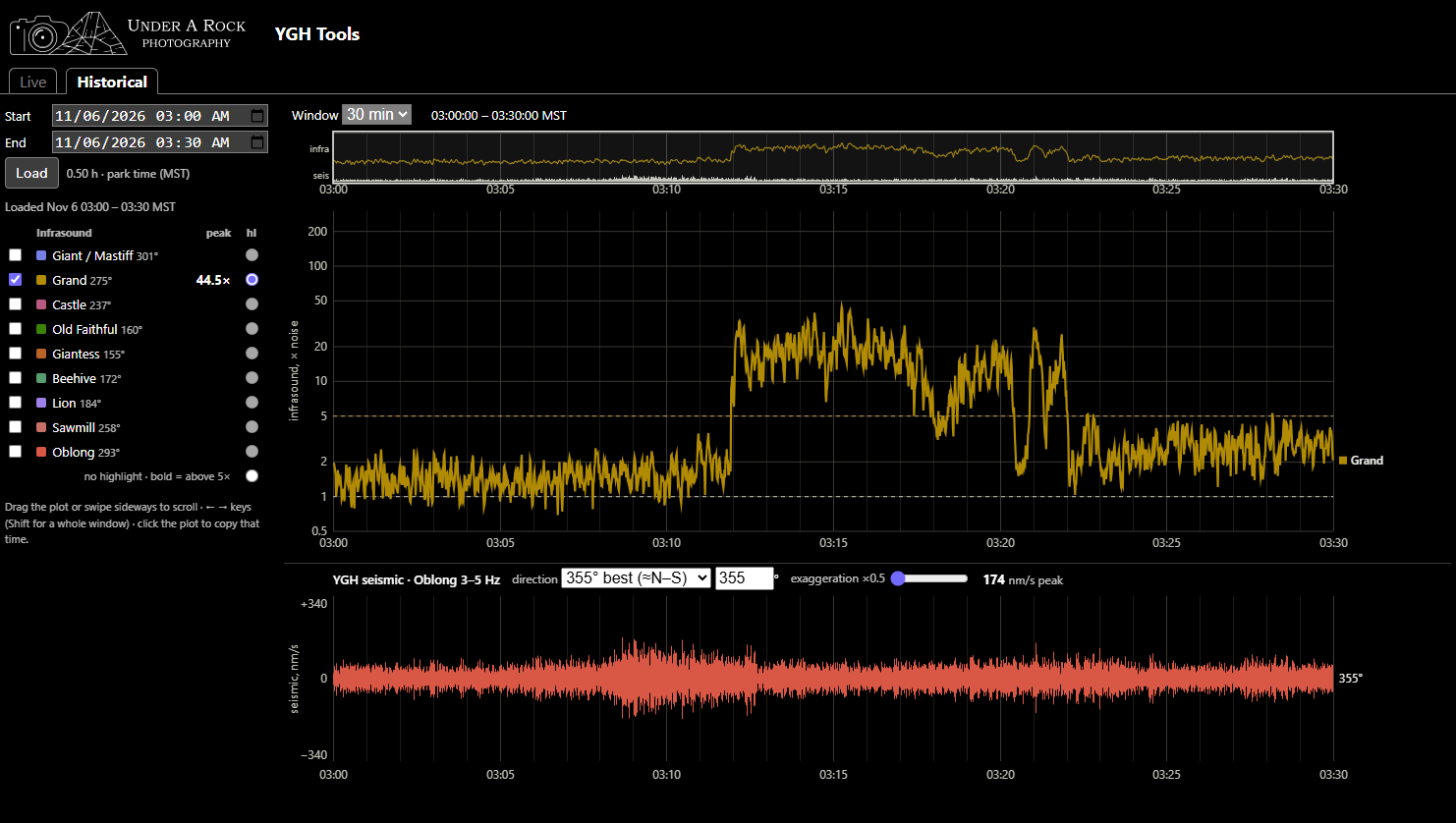
Infrasound and seismic traces for an eruption of Oblong at 0308 and a 2 burst eruption of Grand at 0311 on 6 November 2026.
YGH Monitor App - Pt. 1: Introduction
A new instrument in Yellowstone can be used for geyser gazing
Published: Saturday, 07 November 2026 at 00:55 UTC
Contents:
Update, 11 November 2026: I added a whole bunch of features to the YGH Monitoring App, so this is now just an introductory post. Details on specific features, how to use the tools, etc, are in follow up posts. I also got some wonderful and supportive feedback from Dr. Mike Poland, Scientist-in-Charge at the Yellowstone Volcano Observation, whic installed the YGH infrasound sensors.
Twice a year, Yellowstone’s interior empties of visitors. For several weeks each spring and fall, the park closes its roads while it switches between summer and winter operations. Winter in the interior is harsh enough that the park runs a completely different system. The only traffic is snowcoaches (think school buses on snowmobile treads), only a few areas are open, and most travel beyond them is on skis or snowshoes. The shoulder seasons in between are the hardest stretch of all: the roads are closed to cars and not yet groomed for snow, and almost no one comes in.
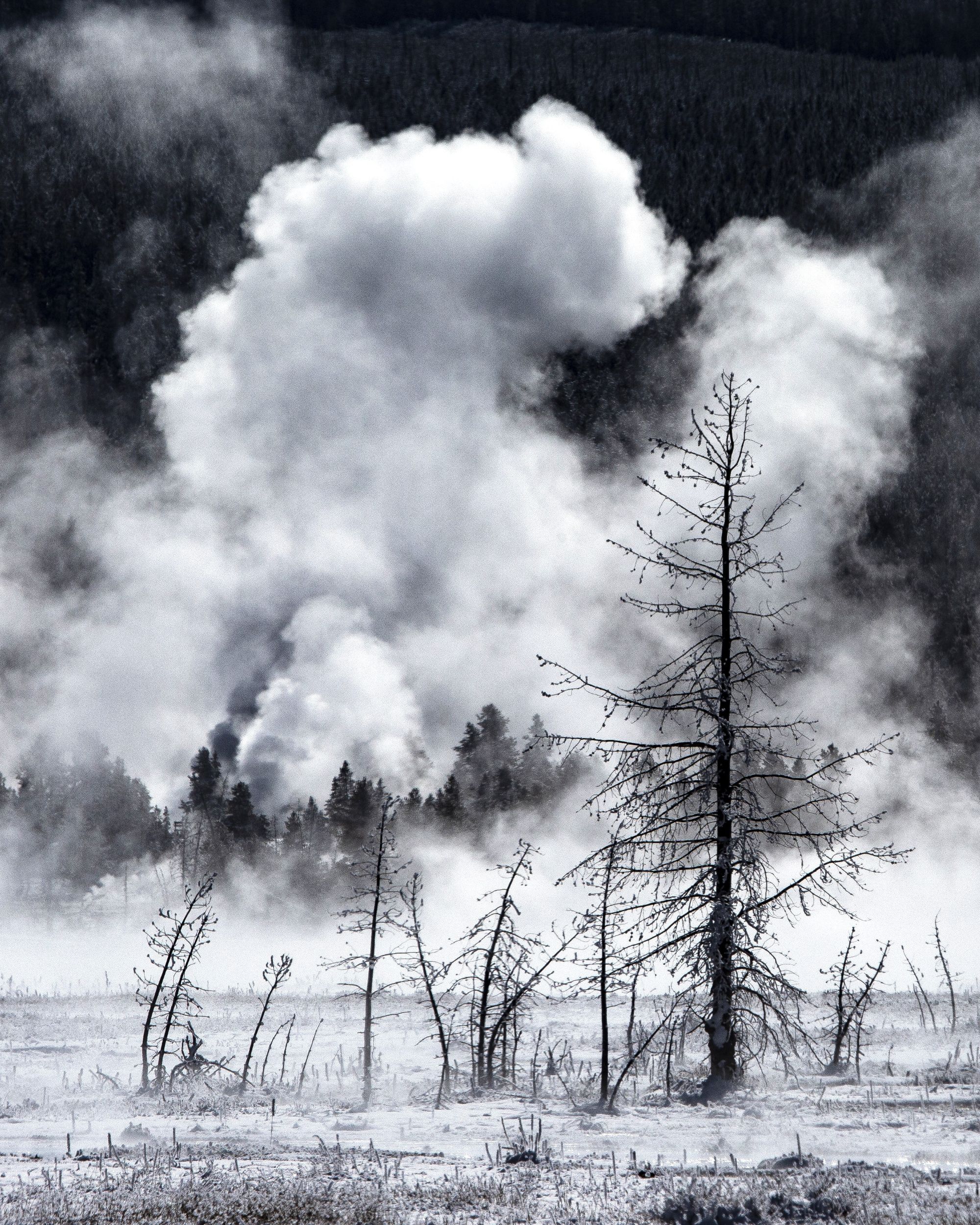
Yellowstone in the winter is a harsh environment.
That leaves a gap in a record that’s otherwise remarkably complete. For most of the year, a small army of volunteer geyser gazers watches the basin’s geysers and hot springs, logging eruptions and changes. During the closures they’re gone. Their eyes are replaced by one webcam on top of the Old Faithful Inn, steered around the clock by volunteers across the country.
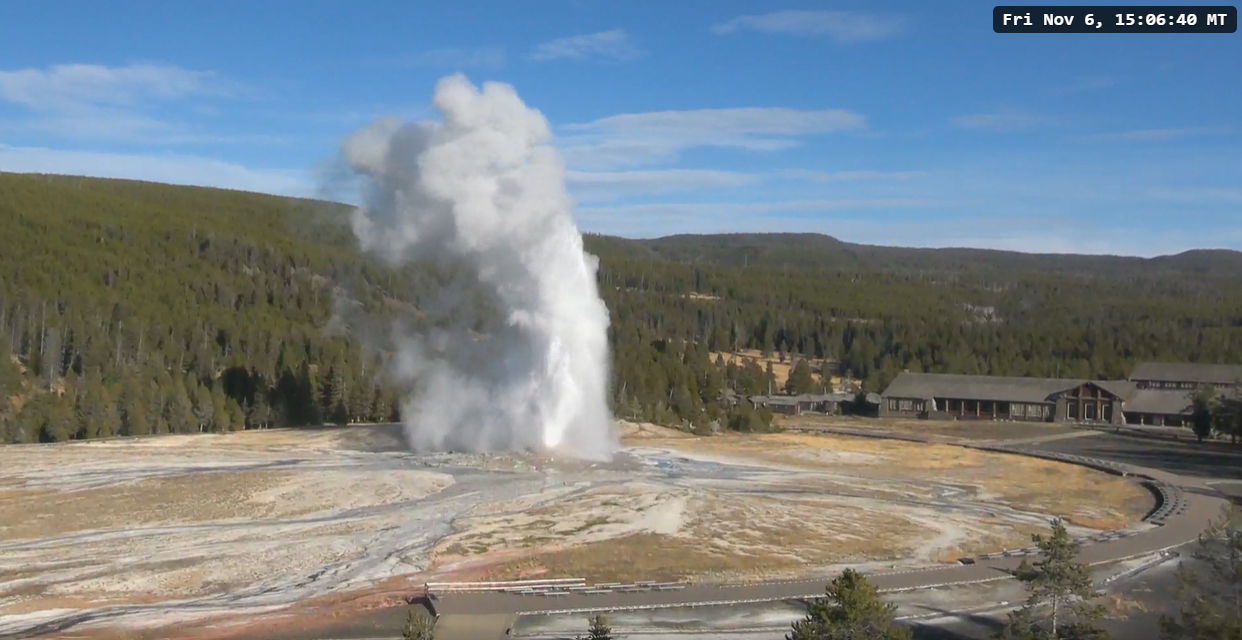
Old Faithful Geyser erupting at 3 o'clock in the afternoon on a Friday in early November with not a soul around to watch it in person. The entirety of the Upper Geyser Basin is currently in the other direction. Image from the Old Faithful Streaming Webcam.
A webcam has blind spots. Nightfall, fog, rain and snow all wipe out the view. And for about 30 minutes out of every hour and a half, the camera has to point at Old Faithful and away from almost everything else, because its first job is showing the public the park’s most famous geyser. Add it up, and every other feature in the basin goes unwatched for at least a third of the daylight hours, and all night.
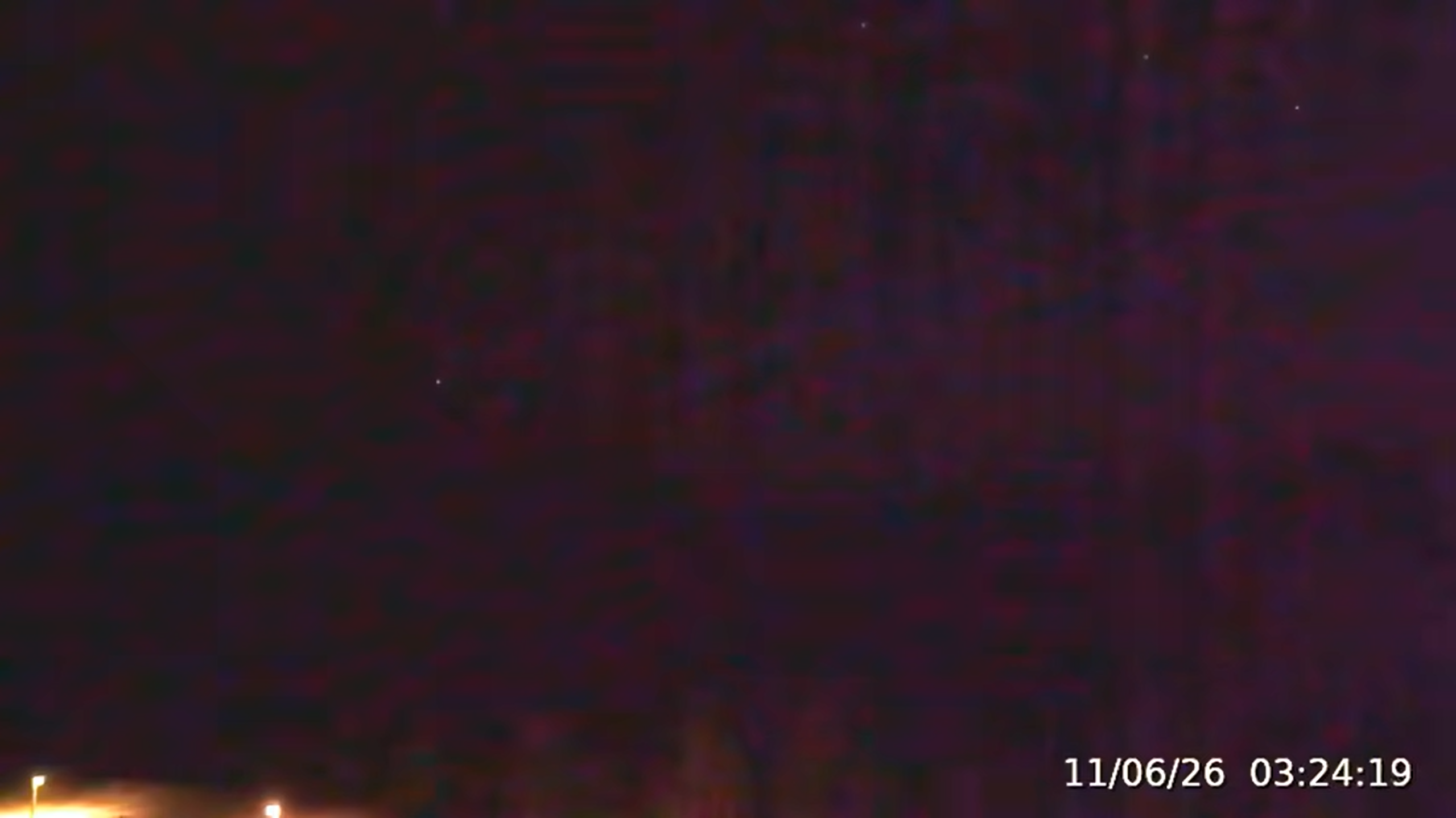
The same webcam pointing north and down-basin at 3:24 in the morning the same day. Lights can be seen in th parking lot, and stars, but no geysers. At this time two features were actively erupting: Grand Geyser and Oblong Geyser. Image from the Old Faithful Streaming Webcam.
Now there’s another way to fill those gaps, one that doesn’t need daylight, clear skies or a camera pointed the right way: listening to the geysers themselves.
Infrasound: The Heartbeat of the Geyser Basins
Night in Yellowstone’s geyser basins reveals a soundscape unlike anywhere else on Earth. With the sounds of people and cars gone, the basin’s own noises take over, and they are loud. Picture yourself on the boardwalk beside Doublet Pool, on Geyser Hill across the river from Old Faithful. More than a hundred features lie within a few hundred feet of you, and most of them are doing something: roaring, spraying, hissing, bubbling, sizzling, popping, plunking and grumbling. Then, as if to add to the chaos, Doublet Pool itself starts to pulse. The water on its surface rocks and shivers as if a subwoofer were driving it, and the boardwalk thumps under your feet like someone is hitting it with a hammer.
To an untrained ear it’s an unintelligible mess, but these noises are the heartbeat of the thermal area. An experienced observer can pick out individual sounds, tell which feature is making each one, and know what that feature is doing. That works only when nothing drowns them out: rain, snow, wind, people or traffic.
Underneath all of it is another kind of sound, too low for human ears to hear. This is infrasound: sound below about 20 hertz. Unless it’s very loud (more on that later), we can’t hear it. Because its waves are so long, it travels great distances with little loss. The right sensors can hear it, though. Put several of them in a small cluster and they can also tell which direction a sound is coming from, because it reaches each sensor at a slightly different moment. An infrasound array in the Upper Geyser Basin can hear the large geysers erupting and identify each one by the direction its sound arrives from. One such array now sits on Geyser Hill and it gives webcam operators and geyser researchers an extra set of ‘eyes’ (ears?) to watch (listen?) the geysers 24/7 and in all weather conditions.
The YGH Array
A team from the University of Utah, Yellowstone National Park and the U.S. Geological Survey, working through the Yellowstone Volcano Observatory (YVO), installed the YGH (Yellowstone–Geyser Hill) station in early September 2026. Its data began streaming publicly soon after. The station has four infrasound sensors, a seismometer that records motion in three directions (up–down, north–south and east–west), a weather station and a radio transmitter. Everything runs on solar power, so the station can operate on its own year-round. The infrasound sensors sit at the surface under wind-screening covers, and the seismometer is buried to pick up vibrations in the ground.

Primary components of the YGH array. The seismometer is out of frame nearby. Photo in the publi domain, courtesy of the United States Geological Survey.
YGH senses the activity of many features. Even a quick look at the seismometer’s record shows a signal repeating about every half hour. That’s Doublet Pool, during one of its thumping episodes. Steam bubbles form and collapse deep in Doublet’s plumbing, and the shocks reach YGH as mostly up-and-down ground motion.
The infrasound sensors can hear the basin’s big geysers, including Old Faithful, Grand and Giant, along with others such as Castle, Beehive and Lion. Giantess will probably be audible too, but it hasn’t erupted since the station went in, so that’s still unproven. The four sensors are spread about 40 meters apart, so a passing sound wave reaches each one at a slightly different moment, with differences of up to about a tenth of a second. From those tiny delays, the direction of the sound can be calculated. Sound from Old Faithful to the south-southeast, reaches the southeastern sensors first. Sound from Giant to the northwest, reaches the northwestern sensor first.
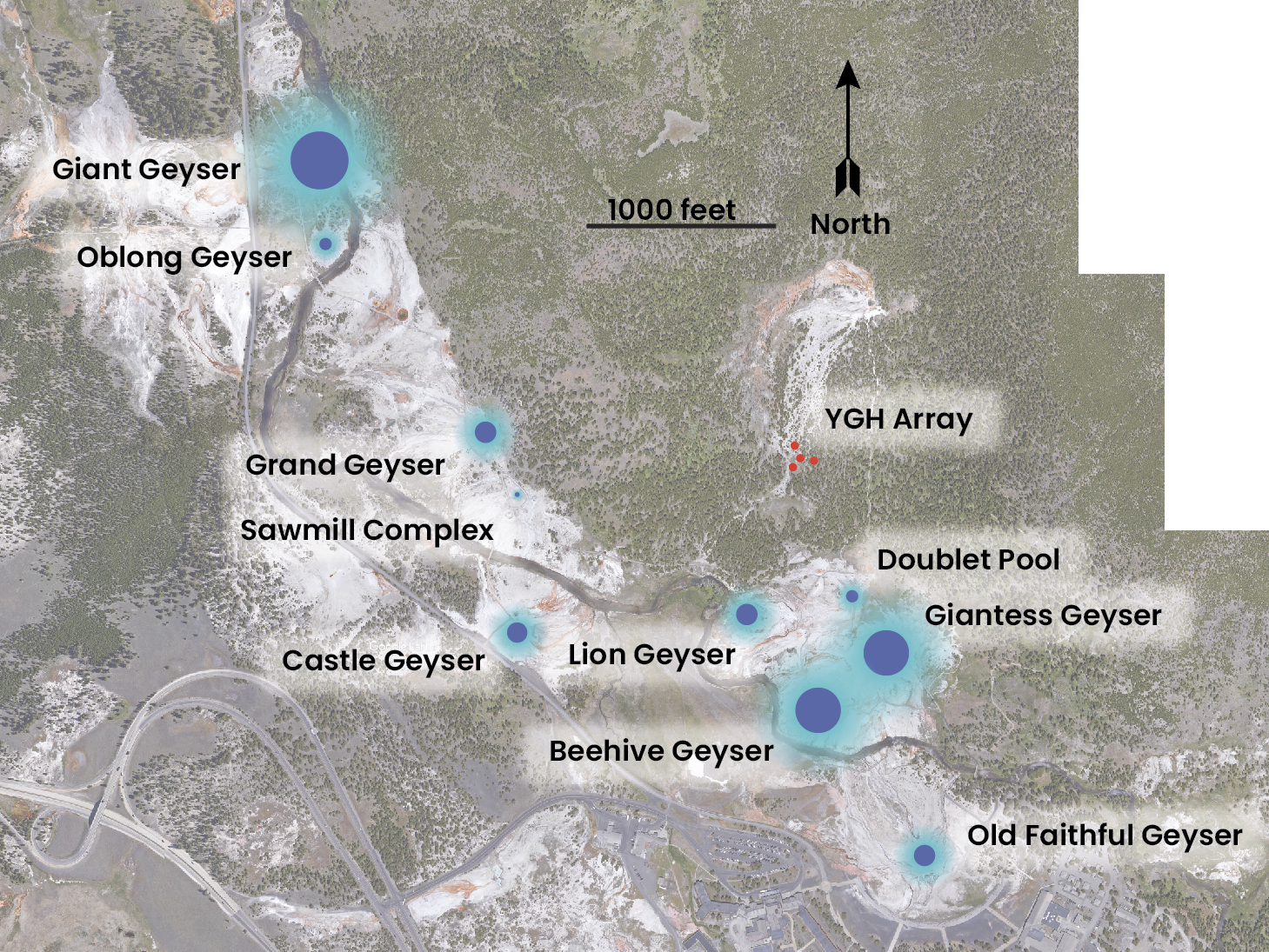
Location of the YGH array in the Upper Geyser Basin and the seven 'loud' geysers which can be heard (or felt) by it. The relative size of the blue dots and shade indicate each feature's relative loudness. The smallest dots can only be heard under very quiet conditions, or via the seismic sensors.
That makes the station’s location critical. If two features lie in about the same direction from the array, their sounds merge whenever they’re active at the same time. They don’t have to line up exactly: features within roughly 10 to 15 degrees of each other are hard to tell apart. Giant and Mastiff sit together on the same platform and are effectively one source to YGH. The sensor is placed in a location that is elevated above most of the geyser basin and in a forested area. This means that there is little terrain to block most of the sounds coming from the largest geysers in the Upper Geyser Basin, and the trees have the ability to help filter wind on strong days.
From Geyser Hill to your Computer Screen
In the southern Upper Geyser Basin infrasound is being generated by more than just thermal features: wind, planes in the sky, trucks and cars on the highway, even distant thunder are all making infrasound waves. Under the surface a bunch of things are shaking and vibrating the ground as well. All of these seismic and acoustic waves are reaching the YGH sensor at all times.
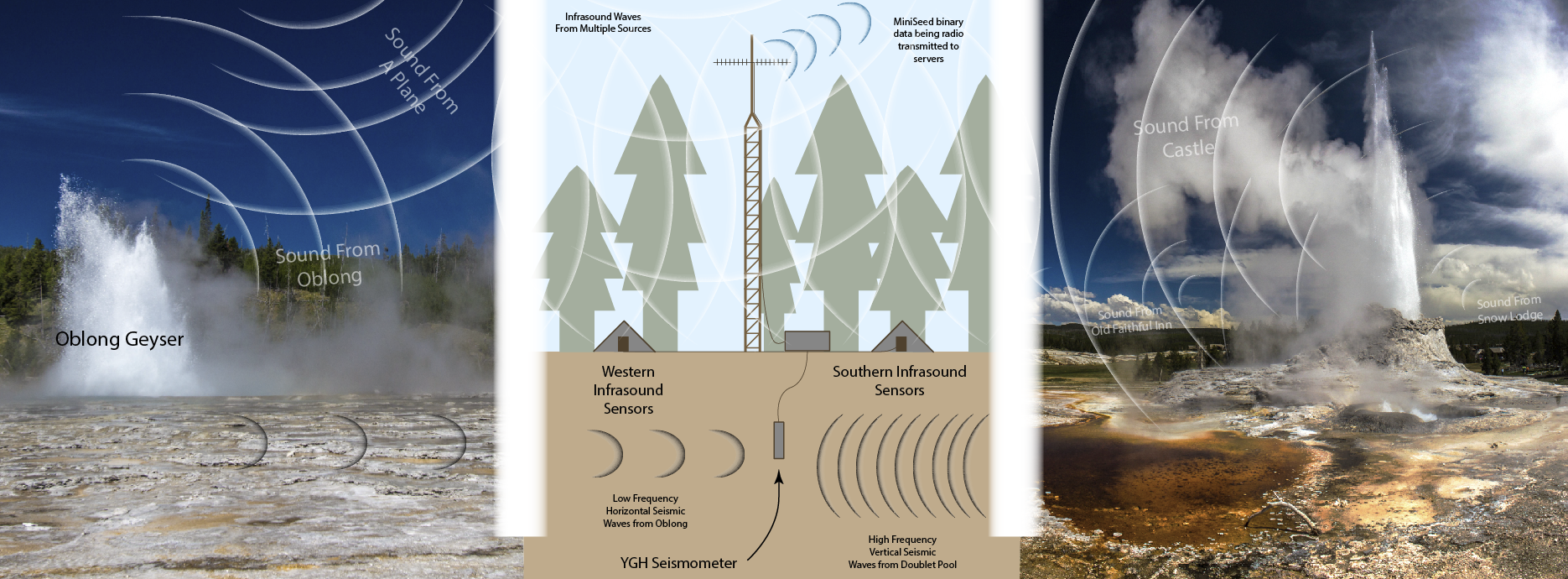
Graphic of how infrasound and seismic waves from various sources are hitting the YGH sensors, which record data about those waves and transmit it as miniSeed binary data to EarthScope's servers.
YGH’s data is streamed to EarthScope, the national seismic data center formerly known as IRIS. Anyone can download it there in near real time, usually within 10 to 30 seconds of the ground moving, in a format called miniSEED. SEED, the Standard for the Exchange of Earthquake Data, is the long-standing format for seismic recordings. MiniSEED is its data-only version: just the measurements, without the instrument descriptions. It’s a compact, compressed binary format, and it has to be. YGH records 100 measurements per second on each of its seven channels: four infrasound sensors and three seismometer directions. That’s about 60 million numbers a day from one station, far too much to send around efficiently as plain text.
To work with this data, I used ObsPy, an open-source Python library built for seismology. It reads miniSEED and provides the standard tools for filtering signals by frequency, measuring their strength, and working out which direction a sound or ground motion came from. These are the measurements that tell one feature from another. I used ObsPy to study past eruptions and build the “fingerprints” of each feature’s signal.
The live tools run in a web browser instead and use seisplotjs, a JavaScript library that does the same kind of miniSEED reading and filtering. My YGH Tools fetch data in two ways: as a batch from the archive for any past time range, or as a live feed that refreshes on an interval you choose. The infrasound data is then “aimed” in the direction of each geyser where the data from the four sensors is combined so that sound from that direction adds up and sound from other directions cancels out. This shows how far above background noise that direction rises. A geyser erupting makes its line climb.
The seismic data is filtered and combined to show horizontal ground motion along a chosen direction. As we’ll see, that matters for one geyser that only shows up reliably on the seismometer.
Filling in the Gaps
For as long as people have watched Yellowstone’s geysers, the record has had holes in it. Night, storms, closed roads and a camera that can only point one way have always meant eruptions went unseen. Even in the middle of summer, with gazers on the boardwalks, no one can watch every geyser at once, and frequently no one is watching all night. A Grand eruption at 3 a.m. may go into the logbook as an approximate time at best. How many bursts it had, and how long it paused between them, went unrecorded..
YGH changes that. Grand’s pauses between bursts show up as clear drops in the infrasound, so an overnight eruption can now be broken down burst by burst, just like one watched in daylight. Oblong eruptions that would have gone completely unnoticed (at night, in bad weather, or while the camera was on Old Faithful) are now picked out of the seismic record, separated from Doublet Pool’s thumping by their pitch and direction. An Old Faithful eruption missed by the camera can be dtermined from its sound instead of estimated. And when Giant stirs, the record can show if Mastiff was a key player, whatever time of day it happens.
That isn’t just a way to cover the closure months. It’s a new kind of record that runs continuously: every eruption these sensors can hear gets a timestamp, at night, in fog and blizzards, and all through the shoulder seasons when the basin is empty. When people are in the basin, it becomes a second witness, a way to check the logbook, catch what everyone missed, and give everyone an extra helping hand.
It has limits. The array can’t tell a long Old Faithful eruption from a short one, smaller features are lost in the background, geysers in nearly the same direction blur together, and wind can swamp everything. A sound trace is a complement to eyes on the geyser, not a replacement. But each limit is something to work on. More eruptions mean better fingerprints. And every eruption logged by a gazer or a webcam operator helps confirm what the sensors are hearing.
The geysers have always been talking; now someone is listening around the clock, and anyone with a web browser can listen in too.

 v.2026.11.12.A
%20--%3e%3cdefs%3e%3cstyle%3e%20.st0%20{%20fill:%20%23fff;%20}%20%3c/style%3e%3c/defs%3e%3cg%3e%3cpath%20class='st0'%20d='M55.7,107.69h-11.41l-2.1,5.82h-3.6l9.46-26.01h3.94l9.42,26.01h-3.6l-2.1-5.82ZM54.73,104.91l-4.73-13.21-4.73,13.21h9.46Z'/%3e%3cpath%20class='st0'%20d='M80.79,100.43c-1.49,1.44-3.76,2.16-6.81,2.16h-5.03v10.92h-3.42v-26.16h8.45c2.95,0,5.2.71,6.74,2.14,1.54,1.43,2.31,3.27,2.31,5.52s-.74,3.98-2.23,5.42ZM78.19,98.53c.9-.83,1.35-2,1.35-3.53,0-3.23-1.85-4.84-5.56-4.84h-5.03v9.61h5.03c1.9,0,3.3-.41,4.2-1.24Z'/%3e%3cpath%20class='st0'%20d='M102.53,100.43c-1.49,1.44-3.76,2.16-6.81,2.16h-5.03v10.92h-3.42v-26.16h8.45c2.95,0,5.2.71,6.74,2.14,1.54,1.43,2.31,3.27,2.31,5.52s-.74,3.98-2.23,5.42ZM99.92,98.53c.9-.83,1.35-2,1.35-3.53,0-3.23-1.85-4.84-5.56-4.84h-5.03v9.61h5.03c1.9,0,3.3-.41,4.2-1.24Z'/%3e%3cpath%20class='st0'%20d='M112.66,112.85c-1.36-.61-2.43-1.46-3.21-2.55-.78-1.09-1.18-2.35-1.2-3.77h3.64c.13,1.23.63,2.26,1.52,3.1.89.84,2.18,1.26,3.88,1.26s2.91-.41,3.85-1.22c.94-.81,1.41-1.86,1.41-3.13,0-1-.28-1.81-.83-2.44s-1.24-1.1-2.06-1.43c-.83-.32-1.94-.68-3.34-1.05-1.73-.45-3.11-.9-4.15-1.35s-1.93-1.16-2.66-2.12c-.74-.96-1.11-2.26-1.11-3.88,0-1.43.36-2.69,1.09-3.79.72-1.1,1.75-1.95,3.06-2.55,1.31-.6,2.82-.9,4.52-.9,2.45,0,4.46.61,6.02,1.84,1.56,1.23,2.45,2.85,2.65,4.88h-3.75c-.13-1-.65-1.88-1.58-2.65-.93-.76-2.15-1.14-3.68-1.14-1.43,0-2.59.37-3.49,1.11s-1.35,1.77-1.35,3.1c0,.95.27,1.73.81,2.33.54.6,1.2,1.06,1.99,1.37.79.31,1.9.67,3.32,1.07,1.73.48,3.12.94,4.17,1.41,1.05.46,1.95,1.18,2.7,2.14s1.13,2.27,1.13,3.92c0,1.28-.34,2.48-1.01,3.6-.68,1.13-1.68,2.04-3,2.74-1.33.7-2.89,1.05-4.69,1.05s-3.27-.31-4.64-.92Z'/%3e%3c/g%3e%3cpath%20class='st0'%20d='M115.19,16.11C105.67.35,85.18-4.71,69.42,4.8c-15.76,9.52-20.82,30.01-11.31,45.77s30.01,20.82,45.77,11.31c15.76-9.52,20.82-30.01,11.31-45.77ZM81.9,49.87c0,1.65-1.34,2.98-2.98,2.98h-8.89c-1.65,0-2.98-1.34-2.98-2.98v-8.89c0-1.65,1.34-2.98,2.98-2.98h8.89c1.65,0,2.98,1.34,2.98,2.98v8.89ZM81.9,24.92c0,1.65-1.34,2.98-2.98,2.98h-8.89c-1.65,0-2.98-1.34-2.98-2.98v-8.89c0-1.65,1.34-2.98,2.98-2.98h8.89c1.65,0,2.98,1.34,2.98,2.98v8.89ZM107.24,49.87c0,1.65-1.34,2.98-2.98,2.98h-8.89c-1.65,0-2.98-1.34-2.98-2.98v-8.89c0-1.65,1.34-2.98,2.98-2.98h8.89c1.65,0,2.98,1.34,2.98,2.98v8.89ZM107.24,24.92c0,1.65-1.34,2.98-2.98,2.98h-8.89c-1.65,0-2.98-1.34-2.98-2.98v-8.89c0-1.65,1.34-2.98,2.98-2.98h8.89c1.65,0,2.98,1.34,2.98,2.98v8.89Z'/%3e%3c/svg%3e)


